Both are vertical videos. Both play full screen. That is where the similarity stops.
A Story goes to people who already know you and disappears in a day. Spotlight goes to strangers and stays up. Posting the wrong thing to the wrong one is the most common mistake new creators make on Snapchat.
The Short Version
| Story | Spotlight | |
|---|---|---|
| Who sees it | Friends. Anyone at all if your profile is public | Anyone the algorithm shows it to |
| How long it lasts | About 24 hours per snap | Indefinitely |
| How people find it | They already follow or visit you | Recommended in a public feed |
| Your name attached | Always | Only with a Public Profile |
| Format | Photos and videos, stacked | Single vertical video |
| Best for | Keeping existing followers close | Reaching people who have never heard of you |
Everything below is just detail on those six rows.

Who Actually Sees Each One
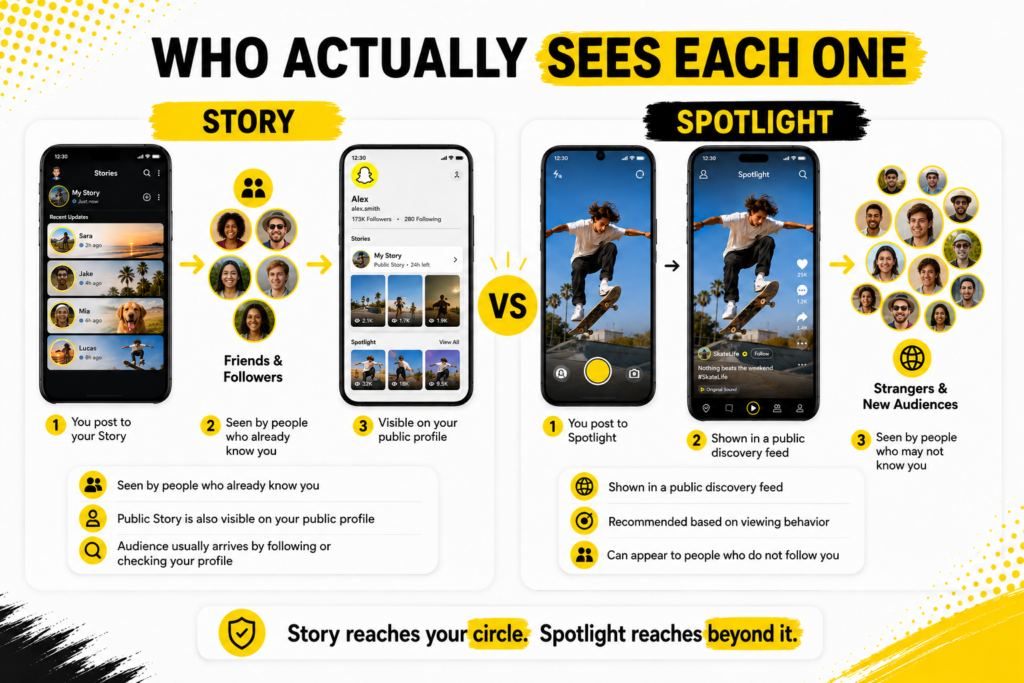
A Story is aimed at people already connected to you. Snapchat describesMy Story as a collection of your Snaps playing in the order you made them, viewable by your friends as many times as they like for 24 hours.
Turn on a public profile and that widens, because your public Story becomes visible to anyone who lands on the profile. Still a pull rather than a push though. Somebody has to come looking.
Spotlight is the opposite. Yousubmit a Snap to Spotlight and it goes into a feed shown to people based on what they watch, not who they follow. Snapchat also notes those Snaps can turn up in search results and in Stories on or off the app.
One is for the people who chose you. The other is for people who have no idea you exist.
How Long Each One Lasts
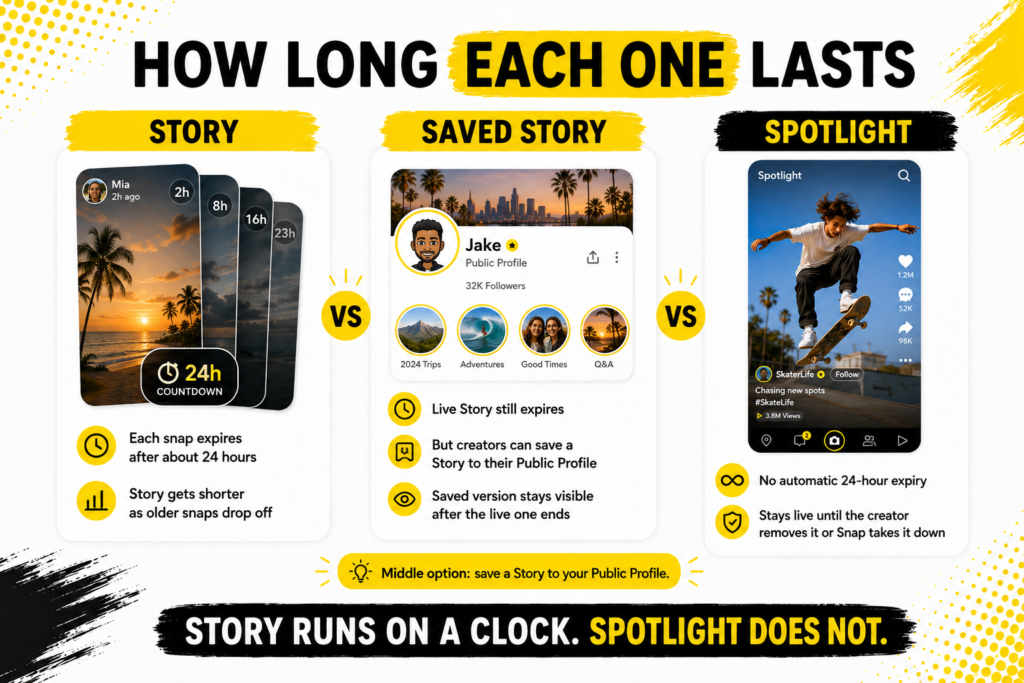
Stories run on a clock. Spotlight does not.
- Each snap in a Story expires roughly 24 hours after it was posted.
- Spotlight clips stay live until the creator removes them or Snap takes them down.
- A Spotlight video can still be collecting views months later.
There is a middle option people forget. Snapchat lets yousave a Story to your Public Profile, which keeps it there long after the live version has gone. That is how creators end up with old stories still sitting on their profile.
Who Can Post to Each
Anyone with an account can post a Story. That part has no barrier at all.
Spotlight is open to anyone too, but with conditions attached. Submissions go through moderation, they have to meet Snap’s Spotlight rules and there is no guarantee yours gets picked up. Posting is easy. Getting shown is not.
Whether Your Name Gets Attached
This one surprises people and it matters if you are trying to build an audience.
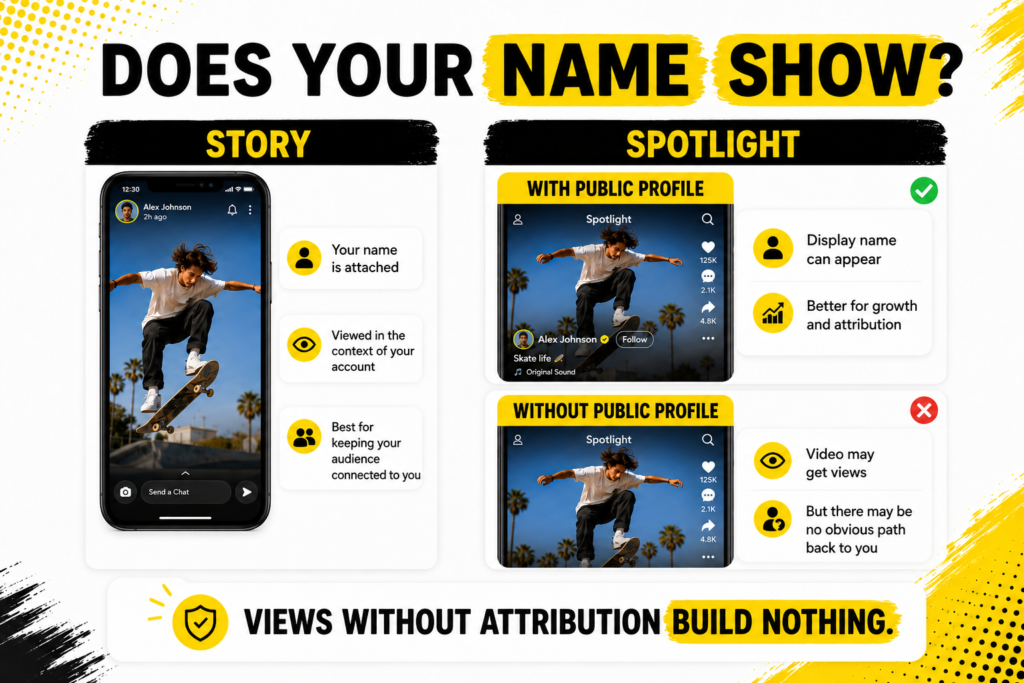
A Story always carries your name. It is going to people who know you.
Spotlight is different. Snapchat states that only Snapchatters with a Public Profile can have their display name shown alongside their Spotlight Snap. Without one, your clip can go out to a large audience with nothing pointing back at you.
So if growth is the aim, set the public profile up before you start submitting. Views with no attribution build nothing.
Which One Should You Post To
Depends entirely on what you want out of it.
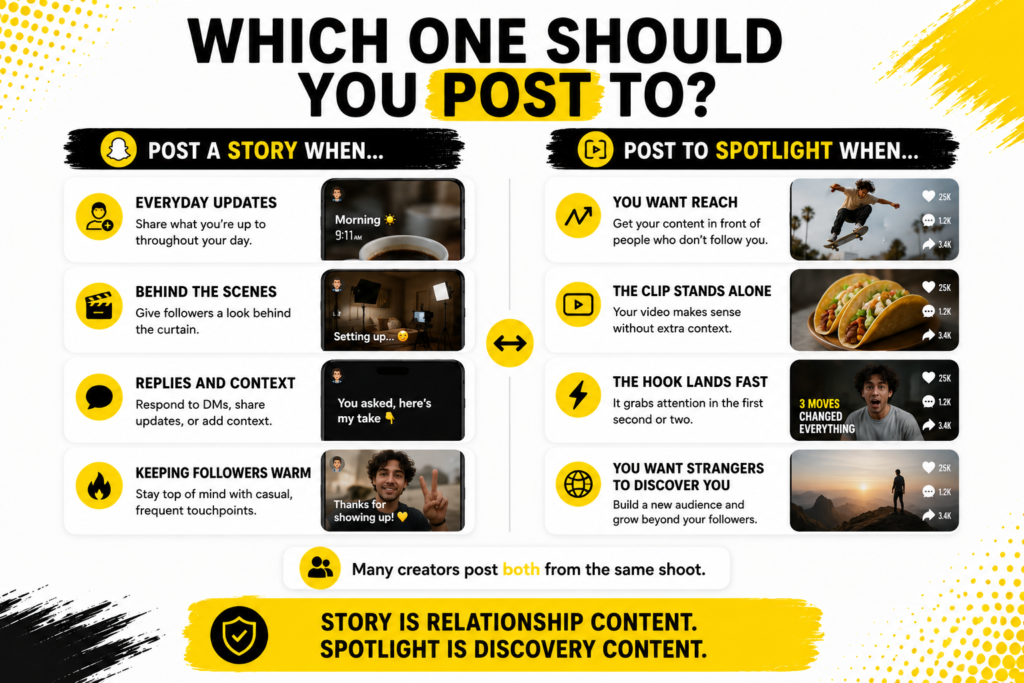
- Post a Story whenyou want to stay present with people who already follow you. Everyday updates, behind the scenes, replies, anything that assumes context.
- Post to Spotlight whenyou want reach. A clip that stands alone, makes sense to a stranger and works in the first two seconds.
Plenty of creators do both from the same shoot. The Spotlight cut is trimmed hard for strangers. The Story version is looser and assumes the viewer already cares.
Worth knowing that Spotlight has carried creator payment programs at various points. The specifics have shifted over the years, so check what is currently running rather than trusting an old article about it.
What You Can See About Performance
The two formats report back to you very differently, which catches creators out when they switch between them.
A Story gives you names. You can open it and see exactly which friends watched, in order, which is why Stories feel personal even on the posting side. Small audience, high detail.
Spotlight gives you numbers instead. Views, engagement, how far people got before swiping away. No list of who watched, because most of them are strangers and Snapchat is not about to hand you a roster of them.
- Story: fewer viewers, but you know who they were.
- Spotlight: far more viewers, all anonymous to you.
That shapes what each one is good for. Stories tell you whether your existing audience is still paying attention. Spotlight tells you whether the idea itself works on people with no reason to care.
Saving Content From Each
The practical difference matters here too.
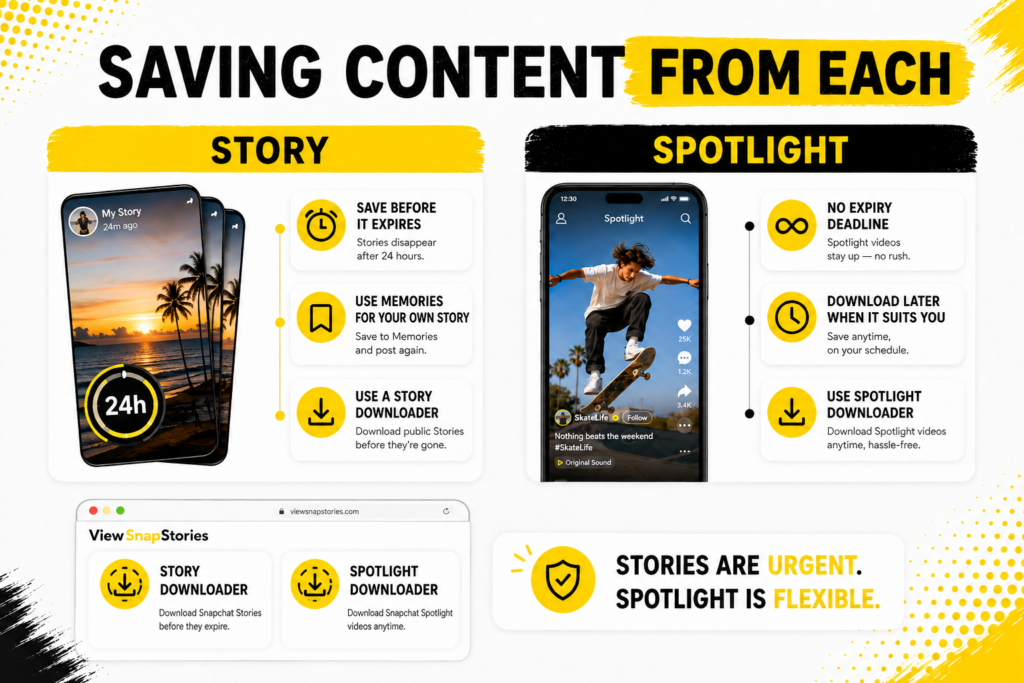
Stories are the urgent one. Miss the window and the snap is gone, which is why people reach for astory downloader the moment they see something worth keeping.
Spotlight has no deadline, so you candownload Snapchat Spotlight videos whenever suits you. The step by step guide walks through it.
Spotlight vs Story FAQs
Can the same video go to both?
Yes. Plenty of creators post a clip to Spotlight and add it to their Story as well.
Does Spotlight show who viewed it?
Not the way a Story does. Stories give you a viewer list. Spotlight gives you counts rather than names.
Which gets more views?
Spotlight, usually by a wide margin. It is a discovery feed. A Story is capped by how many people follow you.
Do Spotlight clips ever disappear?
Only if the creator deletes them or Snap removes them. There is no automatic expiry.
Two Formats, Two Jobs
Stories keep an audience warm. Spotlight goes and finds one. Neither replaces the other and treating them as interchangeable is how people waste good material.
If you are on the watching side rather than the posting side, theanonymous story viewer handles public stories and the Spotlight downloader takes care of the clips that stay put.